Stellar
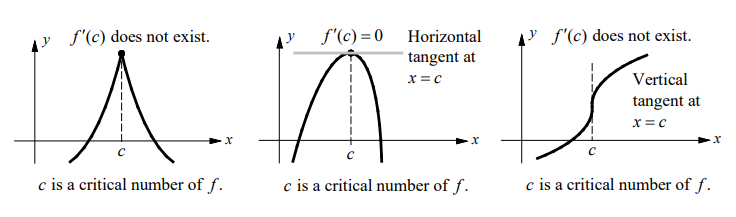
A function is differentiable at a point if its derivative exists there. If a function is differentiable at a point, then it must also be continuous at that point. In other words, differentiability implies continuity. However, the reverse is not always true: a function can be continuous but still fail to be differentiable. This happens when the graph has a sharp corner, cusp, vertical tangent, or some other feature that prevents the slope from approaching one single finite value from both sides.
So when deciding whether a derivative exists, students should check more than just continuity. A discontinuous function is automatically not differentiable at that point, but a continuous function can also fail to have a derivative if the left-hand and right-hand slopes disagree or become undefined in an extreme way. This lesson is important because it teaches students that smoothness matters. A graph must not only be unbroken but also locally “non-sharp” in order to have a derivative at a point.