 Stellar
Why do solutions dissolve in the first place? Let’s take table salt, NaCl, dissolving in water, H2O, as an example. The NaCl molecules are really just an Na+ ion and a Cl- ion combined into one. When it is placed in the water, the positive Na+ ions are attracted to the partially negative oxygen atoms in the water while the Cl- ions are attracted to the partially positive hydrogen atoms in the water, making them separate and is seen in the image below.
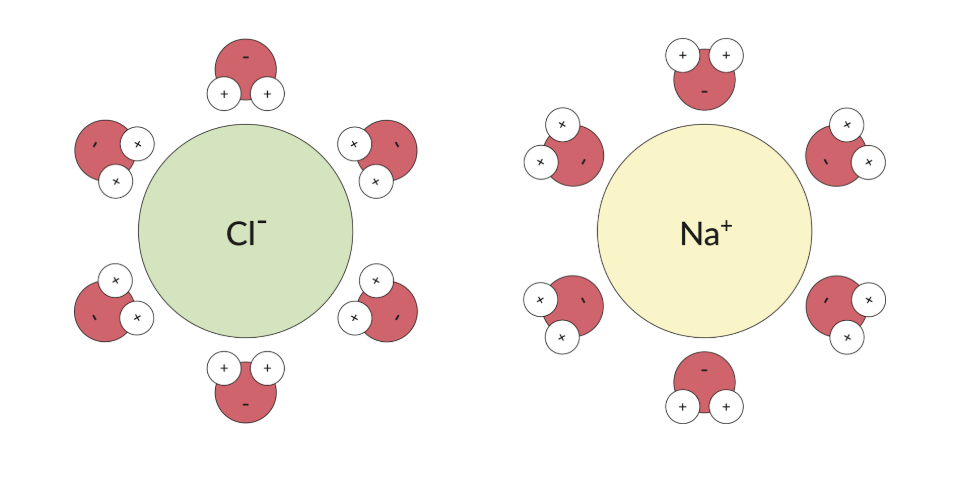
Note that a solution that is non-polar, such as oils, would not be able to be dissolved in water. This creates the idea that like will dissolve like: meaning that polar solutes will dissolve in polar solvents and non-polar solutes will dissolve in non-polar solvents. Non-polar solutes will not be able to dissolve in polar solvents and vice versa.