Stellar
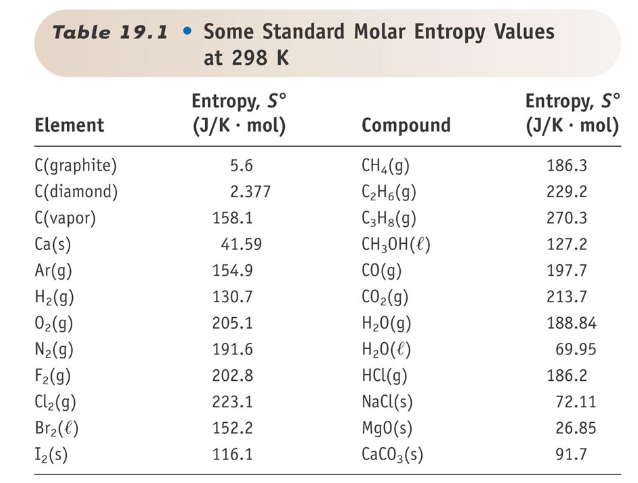
Absolute Entropy is simply the entropy of a system relative to if it were at absolute zero, which is defined as having no entropy. For a chemical reaction, we can find its change in entropy just like how we would find its change in enthalpy using heats of formation, by taking the sum of all the products and subtracting the sum of all reactants.
In this case, is the entropy change for the reaction, is the sum of the standard entropies of the products, and reactants is the sum of the standard entropies of the reactants.
However, unlike heats of formation for finding enthalpy, standard entropies will always be positive, since having 0 entropy means that a solution is at absolute zero, which is physically impossible.